
Health and wellbeing
Risk awareness, sleep and fatigue, alcohol and drugs, emotional regulation and informed decision-making.

Ages 14 to 17 · six weekly modules · teacher-led
DriverReady helps students understand how pressure, passengers, fatigue, distraction and impairment can affect a decision and practise what they will do before those situations arise.

Six weeks for a reason
A memorable road safety presentation can make an impression on the day. DriverReady is designed to go further by giving students time to reinforce what they are learning.
The core programme is deliberately delivered as one 60-minute module each week for six weeks. Students learn new ideas, practise strategies and build on earlier learning as they move through different risks and situations.
We see this within the programme. Four weeks after first learning a strategy in Module 1, students recall it when discussing a different risk in Module 5 and use it in their planning. That is why the time between lessons is important: it gives students repeated opportunities to remember, apply and strengthen what they have learned, helping turn safer thinking into safer habits.
The delivery platform
Accreditation, class enrolment, weekly modules, quizzes, surveys, emails and reporting are brought together in one managed platform.
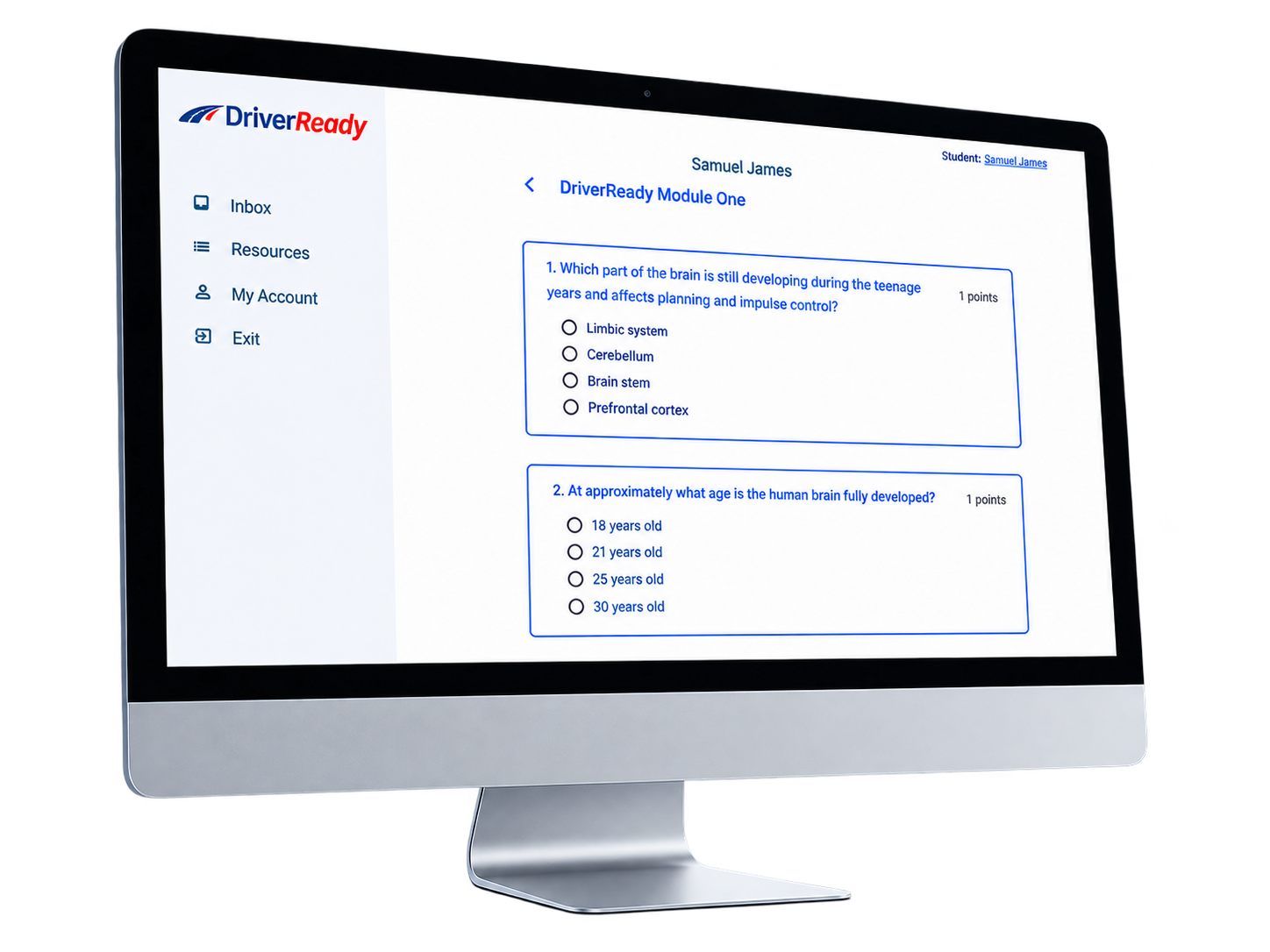
A 20-minute online course prepares the teacher to deliver the programme.
Once accreditation is complete and students are enrolled in their class, the teacher is ready to begin Module 1.
The next module, teacher guidance and classroom materials are available together in one place.
Pre- and post-programme surveys are built into the student journey rather than added as a separate task.
At the end of the programme, changes in student attitudes and behavioural intentions can be reported.
Curriculum fit
DriverReady is aligned with relevant areas of PSHE and RSHE and supports wider personal development provision in England. Its six modules connect road safety with the decisions, influences and wellbeing priorities already present in young people's lives.
Risk awareness, sleep and fatigue, alcohol and drugs, emotional regulation and informed decision-making.
Peer pressure, speaking up, setting expectations, communicating clearly and understanding shared responsibility.
Road law and responsible citizenship, the developing brain, vehicle movement and using evidence to reach reasoned conclusions.
Skills that travel beyond the road. Recognising pressure, weighing consequences, planning ahead and speaking up also reinforce wider wellbeing work, including education about alcohol, drugs and smoking. Explore curriculum fit ↗
Prepared for the classroom
Each module provides the explanation, discussion, activity and practical strategy needed to move students from information to application.
Complete slide decks, teacher guidance, prompts and student activities are designed for everyday classroom delivery and do not require specialist presentation skills.
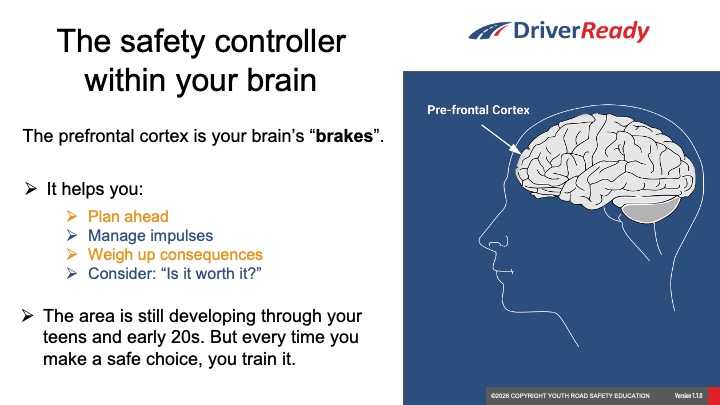
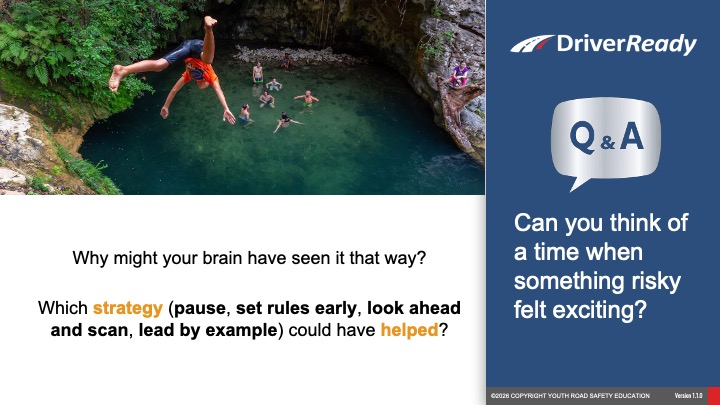
The six core modules
Each module has a distinct purpose. Taught in order, they build a connected way of thinking that students can carry into different situations.
How the developing brain, emotion and reward can influence a decision.
Hazard awareness, scanning, peer influence and the confidence to speak up.
Reaction time, stopping distance, following distance and changing road conditions.
Distraction, inattentional blindness and planning for divided attention.
Sleep, warning signs, microsleep and choices that can be made before a journey.
Alcohol, drugs, passengers and decisions made before anyone starts travelling.
A repeatable learning cycle
This is how DriverReady develops topics such as fatigue. Students first see what is happening and why, then explore a strategy, practise it and decide how they would respond. The same five stages are used again across the programme.
Start with the evidence: what the statistics, patterns or real-world examples show.
Explain why the pattern occurs, such as how sleep loss changes attention and reaction.
Explore practical strategies students could use to prevent the situation or respond earlier.
Use activities and conversation to rehearse what the strategy looks and sounds like in action.
Turn the learning into a personal response, including if–then planning for situations they may face.
Then the cycle begins again. A consistent structure helps students know how to engage with each new topic while leaving the final decision and plan in their hands.
“Instead of just telling me what to do, the programme explains why I might make risky decisions and gives me actual strategies to stay in control.”Student response, Australian classroom
DriverReady is the England adaptation of a programme developed by BRAKE Australia and licensed to Youth Road Safety Education.
Work with YRSE
If you are a school, parent or carer, local authority, government team, road safety organisation or business interested in DriverReady, we would like to hear from you. Tell us what young people in your community need and we can discuss how we might work together.
Start a conversation