Ages 11 to 15 · school-ready · teacher-led
Road independence begins before a car licence.
YRSE’s e-mobility education programme focuses on the decisions young people are already making around e-bikes, e-scooters, speed, visibility and shared spaces.
Why e-mobility
Young people are already making road decisions.
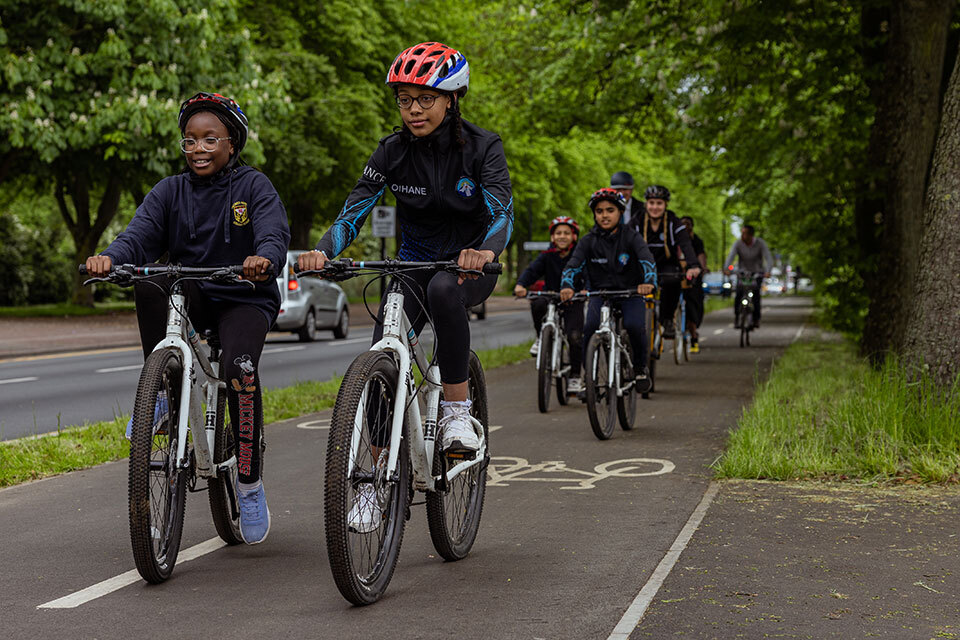
Long before they can drive, young people are deciding where and how to travel, interpreting what devices are allowed and navigating speed, visibility, pressure and shared space.
E-Mobility Education makes the law easier to understand, risk easier to recognise and safer choices easier to plan and practise. It builds the judgement young people need to make safer choices for themselves while considering pedestrians and everyone else sharing the road or path.
What students learn
Five areas of practical judgement.
Knowledge becomes useful when a young person can apply it to a real decision.
- 01
Law, devices and permission
Understand what can be used, by whom and where. Explore how modifications can change an e-bike’s safety and legal status, and why compatible batteries and chargers matter.
- 02
Speed and shared space
Understand how speed changes reaction distance and stopping distance, and what that means when sharing space with pedestrians and other road users.
- 03
Visibility, attention and anticipation
Recognise what riders can and cannot see, whether others can see them, and how distraction, road position and sight lines can change risk.
- 04
Pressure and prepared choices
Plan routes, equipment and responses in advance, including how to make a safer choice when friends or circumstances add pressure.
- 05
Judgement and shared responsibility
Understand how developing judgement, impulse control and peer influence can shape decisions, and consider how those decisions affect everyone sharing the road or path.
How the programme is taught
Every topic moves from understanding risk to a plan.
The programme uses discussion, realistic scenarios, interactive activities and personal planning to help young people recognise risk, anticipate other road users and make safer decisions.
Students see what is happening and why, consider practical strategies, practise how those strategies could work and develop plans for real situations. Learning is age-appropriate and gives young people an active role, without relying on fear appeals or crash imagery.
Built for school delivery
Two modules. Time to understand, practise and plan.
E-Mobility Education is delivered as two 60-minute modules over at least two weeks. Students explore realistic situations, practise strategies and develop plans they can use around e-bikes, e-scooters and shared spaces.
- Classroom delivery
- Two teacher-led modules, supported by prepared classroom materials.
- Teacher preparation
- A 20-minute online accreditation completed before Module 1.
- Managed system
- Class enrolment, modules, quizzes, surveys, emails and reporting are brought together in one place.
- Outcome reporting
- Built-in pre- and post-programme surveys show changes in student attitudes and intended behaviours.
Programme foundation
Established programme experience. Adapted for England.
E-Mobility Education builds on e-mobility education developed by BRAKE Driver Awareness in Australia and adapted by YRSE for English law, road environments and education settings.
Schools, councils and road safety partnerships can discuss delivery and tell us about the e-mobility issues young people are encountering locally. Local priorities and examples can be incorporated while the core learning remains consistent across participating schools.
Bring the programme to your area
What are young people encountering on the roads and paths around you?
If you are a school, council or road safety partnership, we would like to understand what young people in your community need and how we can work together.
Discuss e-mobility delivery